Bring your style to life with windows and doors!
Whether you’re searching for the right windows and doors for your replacement project or your new construction home, this is the right place to start. We’ll explain the design impact windows and doors can have and help you make the right choices for your home style.
Find detailed selection guidance tailored to some of the most iconic American architectural styles. Plus, find out how to add a more contemporary spin to one of these styles. If you don’t know where to begin identifying your home’s style, we have tips that’ll help you start classifying it. Finally, gain insight into the way the fine details of window selection add up to a specific look. Ready to start making your dream home a reality?
Explore our Home Styles Library
Our Home Style Library explains the unique features and history of some of the most popular American architectural styles. Get detailed guidance on making the most authentic window and door selections for your home.
American Farmhouse | Cape Cod | Craftsman Bungalow | French Eclectic | Georgian / Federal | Industrial Modern | International Modern | Miesian Modern | Mission Revival | Prairie | Queen Anne | Shingle | Spanish Colonial Revival | Tudor
What's my home's style?
If you’re wondering how to tell what style your home is, a few basic details can steer you in the right direction.
- When was it built? Different styles were popular during different eras. Identifying vintage can give you a starting point.
- Where do you live? Certain styles reign supreme in certain locales. Sometimes, the style is unique to the place — architects call this the local vernacular.
- What shape is your roof? Some roofs are steep and feature details like dormers or even turrets, some have a lower pitch, and some are flat.
- How many stories is your home? The number of stories is often consistent across homes of a particular style.
- What shape is your home? Architects describe the shape, form, and size of a building as it’s “massing.” A simpler way to think about this could be its silhouette.
- Is it more ornate or more austere? Broadly speaking, ornate styles are more traditional and historic, while austere styles are more modern.
- What material(s) is it made from? This could have to do with what was available in the place where the style originated or how the style was interpreted locally.
- What types of windows and doors does it have? Generally, more traditional homes will feature more details while more modern homes will be stripped down.
It’s also common for homes to blend elements from multiple styles, so if your home doesn’t fit neatly into one category, that’s okay. Mixed architectural styles are common and can still guide your design decisions. Our Home Style Library can help you compare features and find the closest match.

Traditional
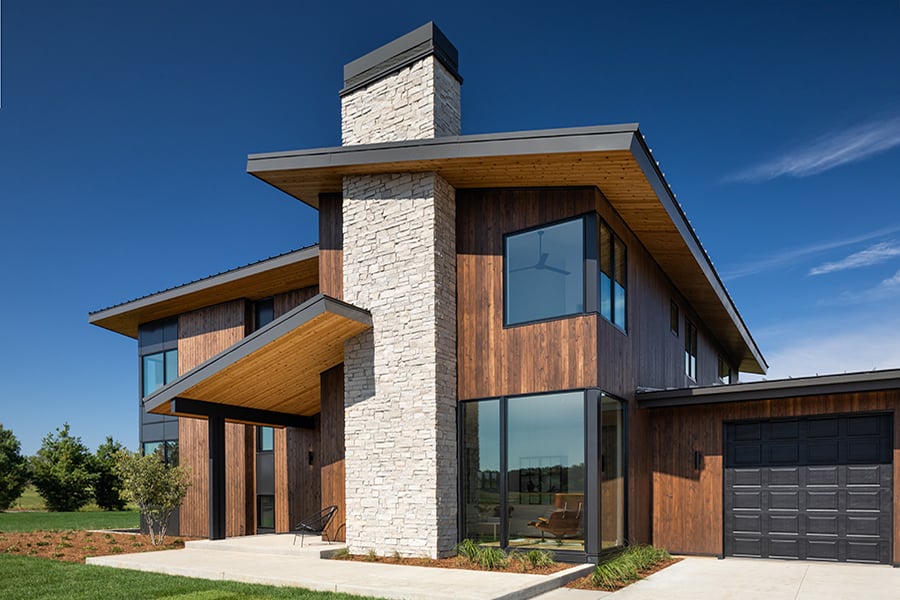
Modern

Transitional
Create a look with your window selections
Understanding selections: A modern Tudor explained
Every window selection in this home, from grille style to placement, works together to create a cohesive, eye-catching exterior. The result? A modern Tudor with timeless curb appeal!
- Bay and bow windows: The second-floor bay window pays homage to the Tudor tradition of asymmetrical design. Its 90-degree angles and black frames give it a contemporary edge, while the colonial grille pattern roots it in tradition.
- Proportions: The narrow, vertical windows on the side of the home reflect classic Tudor proportions, while the floor-to-ceiling picture windows add a modern, light-filled touch.
- Accessories and accents: Transom windows were added to the already very large picture windows on this Tudor to achieve the floor-to-ceiling look and maximize natural light and views of the outside.
- Grille patterns: Tudor houses are known for their decorative grilles. This modern Tudor features a classic colonial grille pattern.
- Color: The black windows seen on this Tudor are one of the most popular features of contemporary homes. A more traditional look might feature a dark brown or reddish-brown finish against a neutral stucco or stone exterior.
Let us help you get started

The best windows for every room
What makes a window ideal for a certain room? For starters, the window needs to suit the function of the space. It also needs to fit the aesthetics of your home. The best windows will unite form and function in a way that suits you — the way you want to live.

Connect with an Andersen Expert
Get personalized guidance from a knowledgeable Andersen representative—no pressure, just expert advice.

Find a Certified Contractor
Vetted, trained and backed by the industry leader, Certified Contractors have extensive window and door knowledge to make any project a success.
Find answers to your home style FAQs
Up next

Understanding window selection
Need some help narrowing down decisions? That’s what our window selection guide is made to do.

Pick the best windows for you
Start thinking through your needs and aesthetic preferences as you create a vision with new windows.

Get inspired by this renovation
Learn how interior designer Jessica Davis renovated her 1960s home to suit a modern family’s needs.
