By Randy Williams
Understanding control layers: A fundamental of building science
Introducing control layers
As our species has moved from caves to stone structures to concrete and mass wood structures to the homes we live in today, our expectations for health and comfort have increased. We want our homes to stay dry — but not too dry. Temperatures are expected to be comfortable, consistent, and vary little throughout the home. Indoor air quality should be healthy to breathe. And we want our investment to last for a long, long time. The parts and pieces of a home that keep the elements out, help control the temperature and humidity, and generally the building performance we all expect are the control layers.
Building science has shown there is an order of importance to the four control layers:
- Water control
- Air control
- Vapor control
- Thermal control
Each of these layers should be identifiable in a set of construction plans.
The water control layer
The air control layer
After water control, the second most important control layer is air control. Small holes and cracks in our building envelope allow outside air (along with dust and critters) to leak in and conditioned inside air to leak out. This constant infiltration and exfiltration can affect indoor air quality, the durability of the structure and comfort. Operating costs, especially in hot and humid and cold climates can also be influenced by air moving through an assembly, as a matter of fact, up to 40% of the heating, cooling, dehumidification or humidification costs associated with creating comfort inside our homes can be attributed to air leakage (New air sealing fact sheet (energystar.gov)
Air contains some level of moisture, which can be a double-edged sword when it comes to the wetting or drying of building materials. When air containing moisture comes in contact with a cold surface, the moisture in the air can condense on that surface. If not properly vented, this, over time, can lead to mold, rot, and affect indoor air quality and building durability. But, when air is dryer than the surfaces it contacts, air movement can promote drying.
The vapor control layer
The vapor control layer, though much less of a concern than the water and air control layers, needs to be given consideration, especially in hot and humid and cold climates. Water in vapor form can move through many common building products. This process is called diffusion, we measure diffusion by a term called permeance. Permeance is how easily water vapor passes through the material. A permeance of less than 0.1 perm is considered vapor impermeable. Materials in this class of permeability would be metal, glass and some types of plastics. Materials with permeance ratings of 10 perms or more are considered vapor open. Most fibrous insulations, unpainted drywall, and many house wraps have permeances greater than 10.
Water vapor wants to move from someplace more, to someplace less. This can result in wetting of building assemblies, but the process can also help dry a material. In cold climates, vapor retarders are often installed on the interior or warm in winter side of wall assemblies to prevent humidity from moving into a dryer wall cavity where it can condense (freeze) on a cold surface. This same vapor retarder may restrict water vapor from drying inward, into the living space. This drying may be needed if a bulk water leak is present, wetting the cavity during a summertime rain event. The biggest consideration in vapor control is to be aware that much more water vapor is transported by way of air leaking into and out of the home than by vapor diffusion. Air control is more important than vapor control in most instances.
The thermal control layer
Windows and control layers
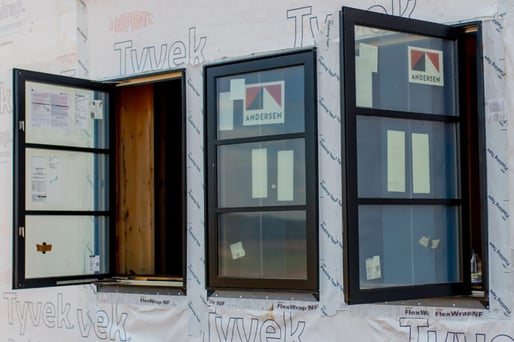
So, how do windows fit into the discussion of control layers? Well, windows are one of the parts and pieces that make up a building’s envelope, they need to be connected to all four control layers to operate correctly. When effectively connected to the water control layer, they help keep water out of the building assembly. They need to keep the wind from blowing into the home and help keep the air you just paid to condition in. And lastly, a window is part of the thermal comfort package of the home. Understanding the control layers is helpful to assure your window installations are effective with continuity with the control layers.
Up next: Dig into window performance.

Window performance
How to pick out windows for your climate
Window performance
Understanding window performance
Meet Randy
Randy Williams started his construction career in the mid-1990s installing electrical, plumbing, and HVAC systems with his brother. In the early 2000s, his family branched into building and renovating homes. By 2005, Randy was working full time as a general contractor. He furthered his education in 2009 becoming an energy auditor. Today, Randy works with other contractors, homeowners, and utilities performing energy audits, building diagnostics, energy design, and code compliant testing, and assisting in the design of energy-efficient homes. He is also a contributing author to several trade publications and occasionally teaches home diagnostic testing and building science topics at different trade shows and training events.